
Blog, 26/11/20266
ENGAGING IN "AUZOLAN": A ULLOA - LIZARRALDEA (November 12-15, 2026)
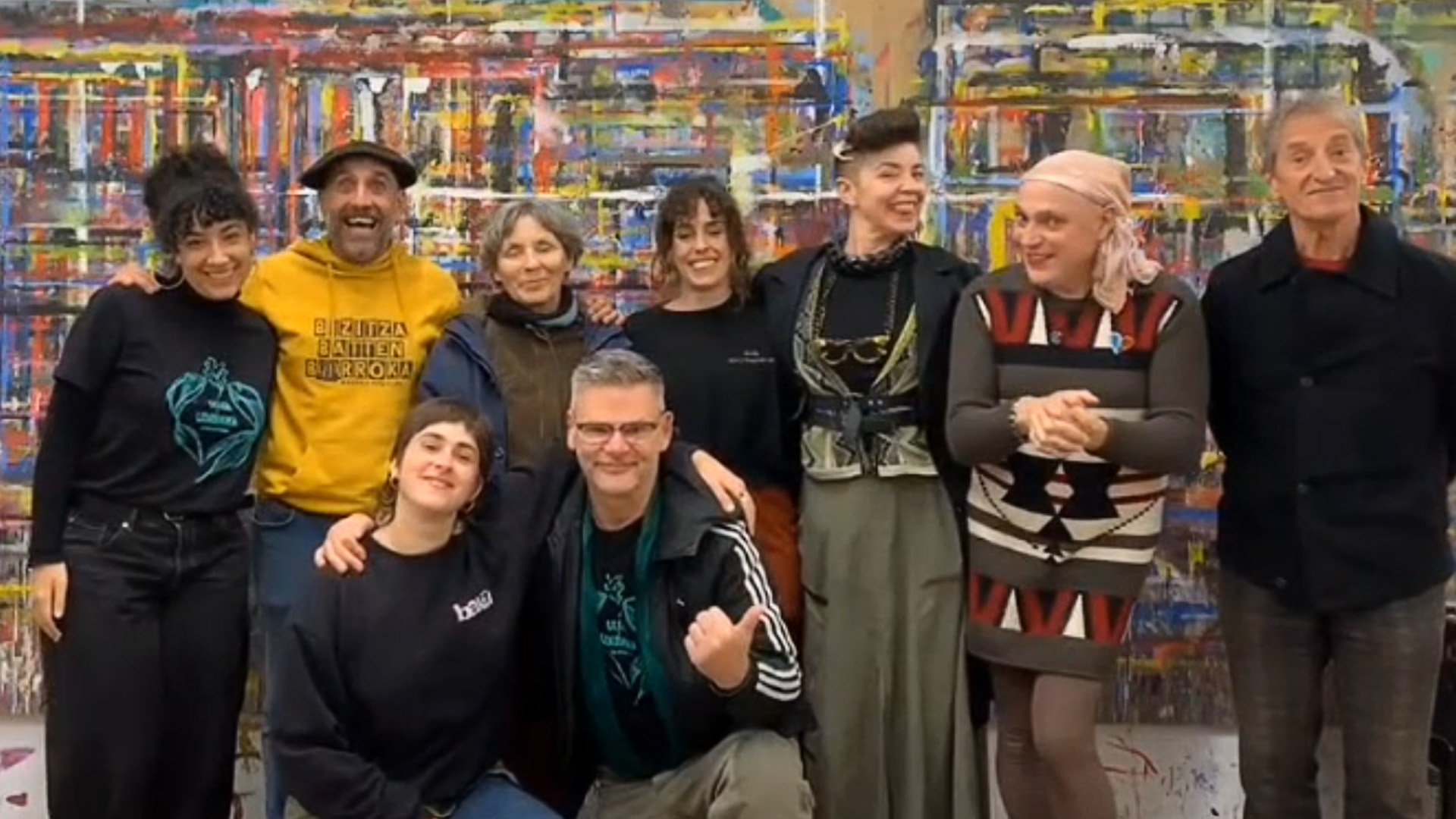
From November 12th to 15th, a group of artists and cultural practitioners from Galicia traveled to Estella-Lizarra, in Navarre, to continue a process of meeting and exchange that began in March, when our counterparts from Lizarraldea visited A Ulloa. This time, it was our turn to change our surroundings—to get a firsthand look at the territory, the projects, and the people who shape the network of alliances we are currently building.
During these days, we gained insight into their creative processes, visited their workspaces, and observed how they engage with their environment and approach artistic practice. We shared meals, joined a demonstration against the genocide in Palestine, and discussed local environmental struggles. Above all, we were inspired to discover a community of people deeply engaged in social projects, activism, cooperatives, and the defense of their territory.
While in March we uncovered affinities we had already sensed, this time we were able to delve deeper—exploring the concerns and aspirations we share: how to sustain cultural projects in rural areas, how to foster community through artistic practice, and how to build forms of collaboration that do not rely exclusively on the dynamics and resources of major urban centers.
Among everything we experienced, one word resonated with us in particular: *auzolan*. Rooted in Basque and Navarrese community culture, this term refers to collective, neighborhood-based labor—a community’s capacity to organize itself to address shared tasks and needs. It is a way of understanding collaboration that transcends individual interests, placing the care of the “common good” at the very center.
Perhaps this is one of the most beautiful links between Lizarraldea and A Ulloa. Cultural and community projects frequently face a lack of resources, precarious conditions, and the persistent challenge of ensuring their long-term continuity. In the face of this—and in contrast to competition and isolation—we advocate for reciprocity, mutual support, and the networks that make it possible to inhabit and transform our territories in different ways.
This exchange is not about finding singular answers or exporting formulas from one place to another. It is about sharing questions and knowledge, and recognizing the value of what is already taking place in each location. It is about discovering that, even though our contexts may differ, there are people thinking, creating, and resisting, driven by very similar concerns.
We return to Galicia with new conversations, ideas, and potential collaborations—but also with the certainty that territories are connected, above all, through the people who inhabit them, imagine them, and work to keep them alive. Perhaps the challenge now is to ensure that these encounters do not merely remain a memory of a few shared days, but instead evolve into lasting relationships, projects, and new forms of collaboration.
Building a territory is also about this: coming together, recognizing one another, and getting down to work. Or, as we have learned in Lizarraldea, engaging in *auzolan*.
Irene Martin, 26/11/2026