
BACKGROUND
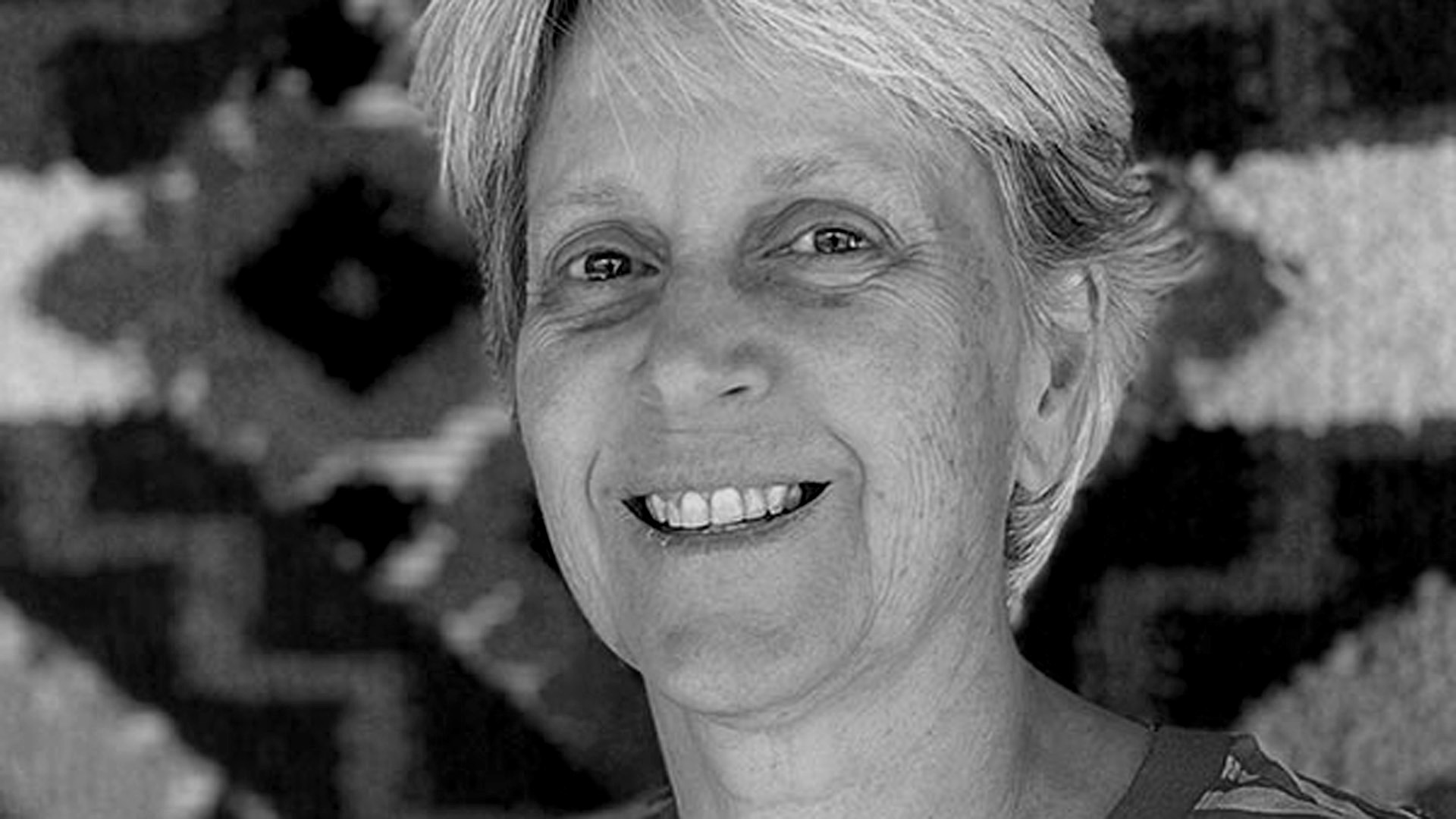
Jean Brundrit is a visual artist from South Africa who works photographically. She has exhibited extensively in South Africa and contributed to a number of international exhibitions. She teaches photography at the Michaelis School of Fine Art, University of Cape Town, South Africa.
Her artistic practice focusses on the environment, the impact of climate change and how this is represented in art, as well as the interconnectedness of humans and their relationship to the natural world. Jean is interested in the advances of visualizing technology including photography – in its broadest definition – and the opportunity that this presents in making things never observed before visible. For one of her recent projects, “Over the Horizon”, photographed in Antarctica, Jean replaced her glass lens with one made out of ice. She was interested to see if ice could form an image, and if so how would ice see the world.
For more information, see: https://humanities.uct.ac.za/michaelis/contacts/jean-brundrit and Instagram
JEAN’S DO PICHO PROJECT
The proposal for my residency at Do Picho had an environmental focus. Before I arrived, Ralf Jurgens, Do Picho’s founder, had told me about millions of plastic pellets that had washed up on beaches in Galicia. I decided to focus on this environmental mishap. The world’s oceans are connected. What happens in Galicia –– a ship spilling containers –– will inevitably affect places far beyond the local shoreline. Those plastic pellets disperse along ocean currents and circulation systems.
I sought to draw a poetic analogy between the pilgrimage routes to Santiago de Compostela that have been walked for centuries and the passage of water in the ocean. Prior to my residency at Do Picho, I had participated in a conference on Antarctic research. Antarctica is a major driver of ocean circulation. So, it seemed logical to highlight the oceanic connection between the Galician coast, my home town, Cape Town, and Antarctica. All three spaces were in my thoughts. While I wanted to recognize the specificity of Galicia, I was also thinking about its position globally.
These were the thoughts I brought with me to Do Picho. The residency artwork took shape during my time there, influenced by visits to the coastline, the experience of being immersed in the environment, and my reflections on those encounters and discoveries.
I listened to a radio interview with the author, Alfredo Conde, in which he talked about the magical quality of Galicia and the transformative power of the elements to shift what we think we see. Camera technology favours description. His idea that, in certain conditions, an object may be understood as more than one thing, intrigued me. I explored this and other ideas through making photographs, small cyanotypes and engaging in visual experimentation to find the way forward for my project.
After the residency I continued to develop my project. I returned to the core of my enquiry: a focus on plastic pollution in the oceans and how it is spread globally, carried on ocean currents. I drew conceptual and visual connections between photographs I had taken with an ice lens in Antarctica, photographs of clouds made in Cape Town, and images from the coastline of Galicia.